


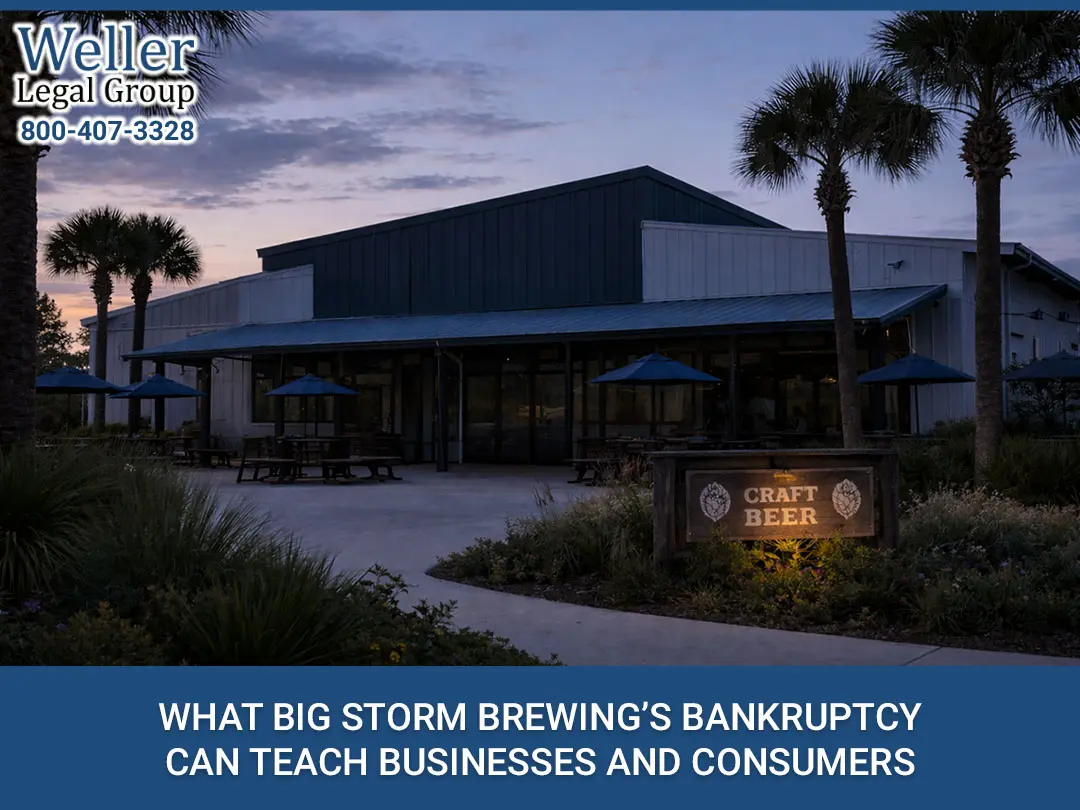
When a well-known local brand files for bankruptcy, it raises immediate questions for employees, vendors, customers, and other businesses watching from the sidelines. The bankruptcy of Big Storm Brewing is a reminder that financial distress can affect companies of any size, even those with strong community recognition. It also highlights how quickly market pressures, debt obligations, and operational costs can converge. For individuals and business owners in Clearwater, the news often prompts a practical next step: understanding what bankruptcy is designed to do and when it is time to speak with a bankruptcy attorney or bankruptcy lawyer about options and risk.
This overview is educational and focuses on the general bankruptcy concepts that commonly arise when a company files for bankruptcy. Public court filings contain case-specific facts, but the broader lessons apply to many businesses and consumers in Florida.
Why a Brewery Might Reach a Bankruptcy Point
Breweries operate in a market with many competitors and where price is important. Equipment financing, lease payments, distribution costs, payroll, insurance, and raw materials that may change in price are all examples of expenses. Profit margins can quickly shrink if sales slow down, a company grows by taking on debt, or it opens many new locations at once.
In many fields, a single problem doesn’t lead to bankruptcy. Most of the time, it’s because several pressures occur at once. When sales are strong, it’s simple to keep up with falling sales, rising costs, and debt payments. But when sales are weak, it can be challenging to keep up with these things. Long-term leases or fixed vendor contracts might also make it harder for the business to be flexible.
People should know that bankruptcy can significantly affect cash flow. A company can look busy and still be going bankrupt if its debts exceed its incoming revenue or if its debt structure isn’t working.
What Bankruptcy Usually Means for a Company
Bankruptcy for businesses is a legal process that allows a company to deal with its debts when it can’t pay them. Depending on the chapter filed, bankruptcy may mean reorganizing debts and continuing to run a business, or it may mean selling assets and shutting down.
During a reorganization, the business usually needs time to talk to its creditors and possibly renegotiate the terms of its leases, contracts, and repayment plans. In a liquidation, the business may sell its assets and divide the proceeds in accordance with the law. The treatment of employees, landlords, secured lenders, and unsecured creditors may vary depending on the type of claim and the available assets.
Bankruptcy doesn’t always mean that a business will close right away for customers. Some businesses keep going during the process. But the filing can affect gift cards, memberships, loyalty programs, and vendor relationships.
How Bankruptcy Affects Vendors, Landlords, and Employees
When a business files for bankruptcy, vendors and landlords often want to know what will happen to unpaid bills and new orders. In many cases, creditors have to file claims with the bankruptcy court to recover their money. Timing and paperwork can be important. Vendors may contemplate whether to continue providing goods if they haven’t received payment for previous deliveries.
Landlords may not know if the company will keep or break the lease. Depending on the situation, bankruptcy law may allow court-ordered renegotiation or termination of some leases.
Employees might be worried about their pay, benefits, and job security. During some reorganizations, payroll stays the same while the business tries to stabilize its operations. In some cases, people lose their jobs or businesses close. The specifics depend on the company’s plan, its financial position, and the court’s decision.
Lessons for Small Business Owners Watching From the Outside
You can learn a lot about planning and risk management from the bankruptcy of Big Storm Brewing, even if you don’t work in the brewing business. Business owners often find it helpful to look over these areas:
It’s more important to know how much money will come in than to be hopeful. You need to know how quickly you would get into trouble if your income dropped for a few months.
The structure of debt should align with reality. Short repayment terms for long-term investments can make it challenging to run a business.
Lease obligations put pressure on you that doesn’t change. If sales slow down, having more than one location can worsen the risk.
Terms of sale can become a weakness. If you depend on suppliers’ credit terms, a problem can spread.
Usually, taking action early costs less. The sooner you ask for help, the more choices you usually have.
A bankruptcy lawyer can help business owners determine whether restructuring, negotiating, or filing for bankruptcy protection is the best option. Waiting too long can limit your options and make you more vulnerable.
When Consumers Should Pay Attention to Bankruptcy News
People often think that a company’s bankruptcy has nothing to do with its finances. In fact, it can be important in many situations. Workers may have trouble with their pay. Vendors or contractors might not receive the money they expected. Investors could lose money.
Customers might be unable to use their unused gift cards or prepaid services.
If you experience job loss, reduced hours, or unpaid business receivables tied to a bankruptcy, you may face personal financial strain. In those situations, it can be helpful to talk to a bankruptcy lawyer to find out how filing for personal bankruptcy could help you avoid getting more debt, lawsuits, or collection calls.
Frequently Asked Questions About Corporate Bankruptcy
Does a bankruptcy filing mean the business is closing?
Not always. Some companies reorganize and continue operating, while others liquidate and close. The chapter is filed, and the court-approved plan determines the path.
What happens to gift cards or prepaid services?
Policies vary, and customers may become unsecured creditors. Some businesses continue to honor gift cards during the case, but this is not guaranteed.
Can vendors still collect on unpaid invoices?
Vendors may need to file a proof of claim in the bankruptcy case. Payment depends on the claim type and the assets available.
What is the difference between a bankruptcy attorney and a bankruptcy lawyer?
These terms are commonly used interchangeably. Both refer to legal professionals who advise clients on bankruptcy and related debt-relief options.
When should someone consider personal bankruptcy after a business bankruptcy affects them?
If lost income or unpaid receivables create mounting debt, missed payments, or collection threats, it is wise to seek legal guidance early.
The bankruptcy of Big Storm Brewing illustrates how swiftly financial pressures can build, even for recognizable brands. For business owners, it is a reminder to monitor cash flow, debt obligations, and fixed costs carefully. For consumers, it highlights how corporate filings can ripple into personal finances through job changes, unpaid invoices, or lost prepaid value. If you are in Clearwater and need guidance from a bankruptcy attorney or bankruptcy lawyer on what options may fit your situation, contact Weller Legal Group to schedule a consultation and discuss next steps.
Picture Source: AI-generated