


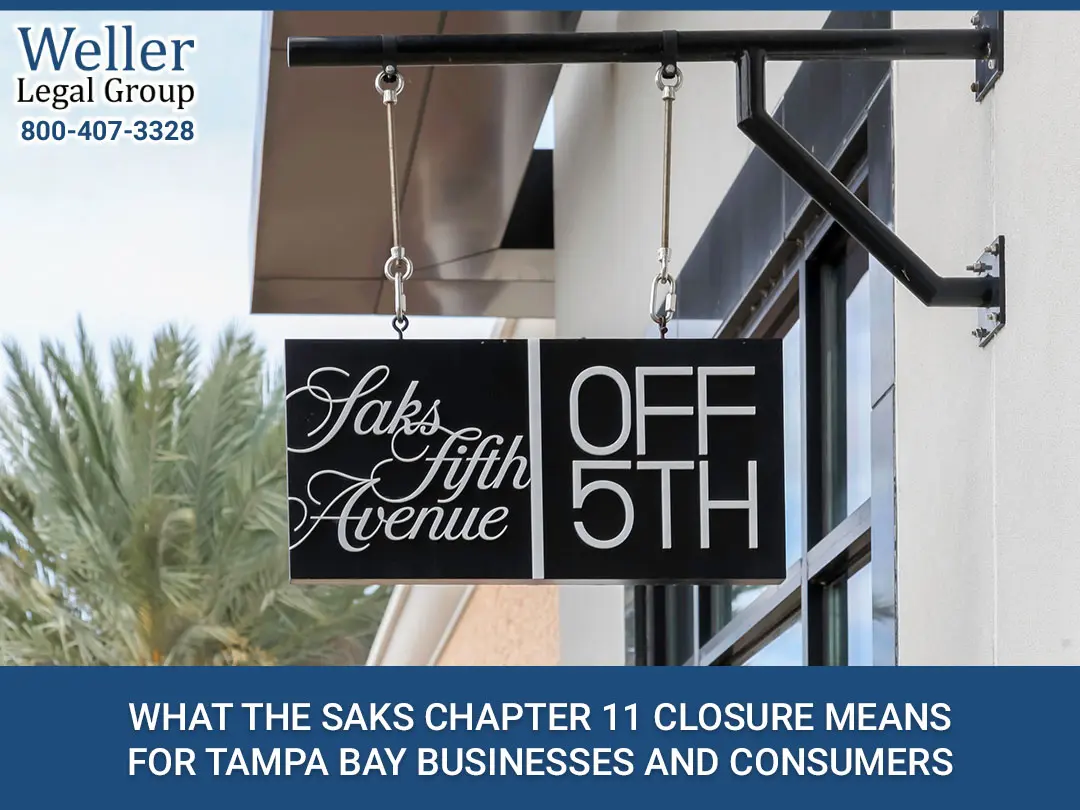
Recent retail developments have drawn attention to how corporate restructuring affects local economies and everyday consumers. The bankruptcy filing by Saks Global Holdings and the closure of several Saks Off 5th stores serve as a clear example of how financial pressure can reshape even well-known brands.
For residents and business observers in the region, this situation illustrates the value of understanding how Chapter 11 bankruptcy works and when professional legal guidance is essential.
In the broader Tampa Bay marketplace, insight from a qualified bankruptcy attorney can help individuals and companies navigate these complex proceedings with confidence.
Understanding Chapter 11 reorganization
Chapter 11 bankruptcy is a legal process for a business to restructure its debts while remaining operational. Unlike liquidation, Chapter 11 aims to maintain value and operations under the court’s supervision.
After a filing is made, an automatic stay halts most creditor actions, such as lawsuits and attempts to collect money. During this break, the business reviews its finances, renegotiates its debts, and develops a reorganization plan that the court must approve.
Staying alive is not the goal. Chapter 11 is meant to find a middle ground between the debtor’s and the creditors’ needs. Should they cease aiding the company’s recovery, the court may alter payment plans, renegotiate leases, and terminate certain contracts. The court’s oversight makes sure that the process is fair and open.
Why Saks pursued restructuring
The bankruptcy of Saks is a sign of bigger problems for brick-and-mortar stores. Traditional department stores are struggling due to rising costs, changes in how people shop, and intense online competition. Saks was able to stabilize its finances and review underperforming stores when it filed for Chapter 11.
The closure of some Saks Off 5th stores illustrates how restructuring decisions can affect certain areas. The reorganization will not stop the whole organization from working, but some locations may close to save money. These decisions are often more about making strategic changes than about the business failing completely.
Local economic ripple effects
When a big store changes its structure, the effects extend beyond its doors. Employees may lose their jobs, vendors may face unpaid bills, and landlords may have to change the terms of their leases. Each of these groups operates within a structured legal system that prioritizes compliance with bankruptcy court rules.
Employees may be able to file priority wage claims, but vendors must file the correct paperwork to be included in the repayment plan. These requirements show how technical Chapter 11 proceedings are. To protect your financial interests, you need to know how to follow these rules.
Debtor-in-possession operations
As a debtor in possession, the company usually remains in charge of day-to-day operations, a unique feature of Chapter 11. Management is still in charge of running the business, but big financial decisions need court approval. This model helps keep things going, protect customer relationships, and preserve the remaining value.
But this structure comes with strict rules for reporting. The court closely monitors compliance with financial transparency requirements, which are crucial. The process of reorganization is all about finding the right balance between operational independence and judicial oversight.
Lessons for business owners
The restructuring of Saks is a reminder to entrepreneurs in the region that financial stress can quickly get worse. Looking at restructuring options early on often gives you more choices than reacting to pressure. Companies that manage debt responsibly are more likely to maintain operational stability and protect their relationships with stakeholders.
By viewing bankruptcy as a legal tool rather than a last resort, owners can explore ways to recover that preserve their business’s value. Professional guidance is very important for finding workable strategies.
Frequently asked questions
What is the purpose of Chapter 11 bankruptcy?
It allows a company to reorganize debt while continuing operations under court supervision.
Do store closures mean the entire company is shutting down?
Not necessarily. Closures may be part of a restructuring plan designed to improve financial stability.
How are employees affected by Chapter 11?
Workers may file priority claims for eligible unpaid wages earned before the filing.
Can vendors recover outstanding payments?
Yes, vendors may submit formal claims through the bankruptcy court process.
Is Chapter 11 always a sign of failure?
No. Many companies use restructuring to regain financial footing and continue operating.
The Saks restructuring demonstrates how Chapter 11 bankruptcy functions as a practical mechanism for business recovery while producing real local effects. For individuals and companies in Tampa Bay, understanding these legal frameworks can reduce uncertainty during financial transitions. Consulting a knowledgeable bankruptcy lawyer provides clarity, structure, and informed decision-making when navigating restructuring challenges. Those seeking experienced legal insight may explore Weller Legal Group services when evaluating bankruptcy-related matters.
Picture Credit: Depositphotos